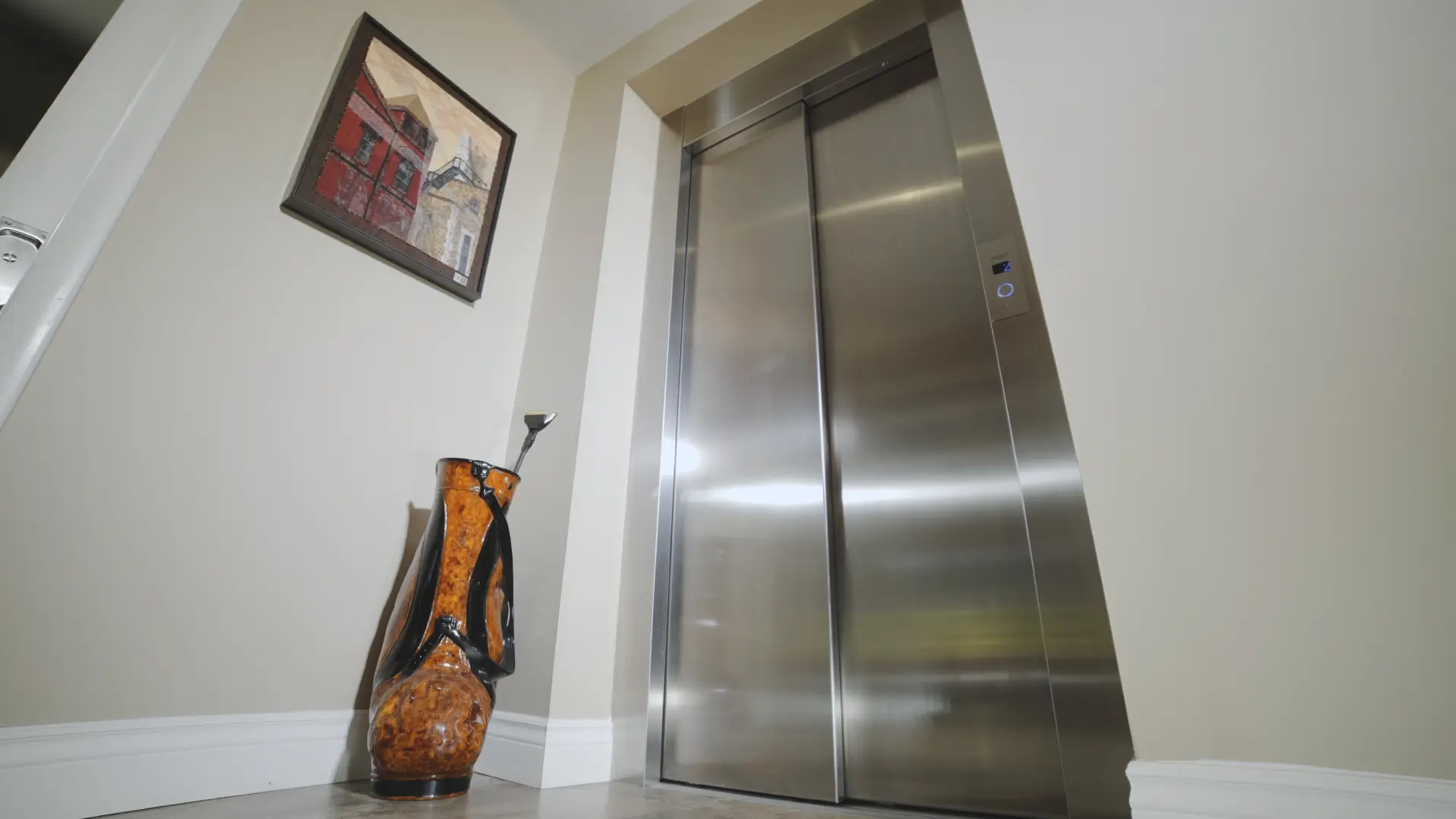
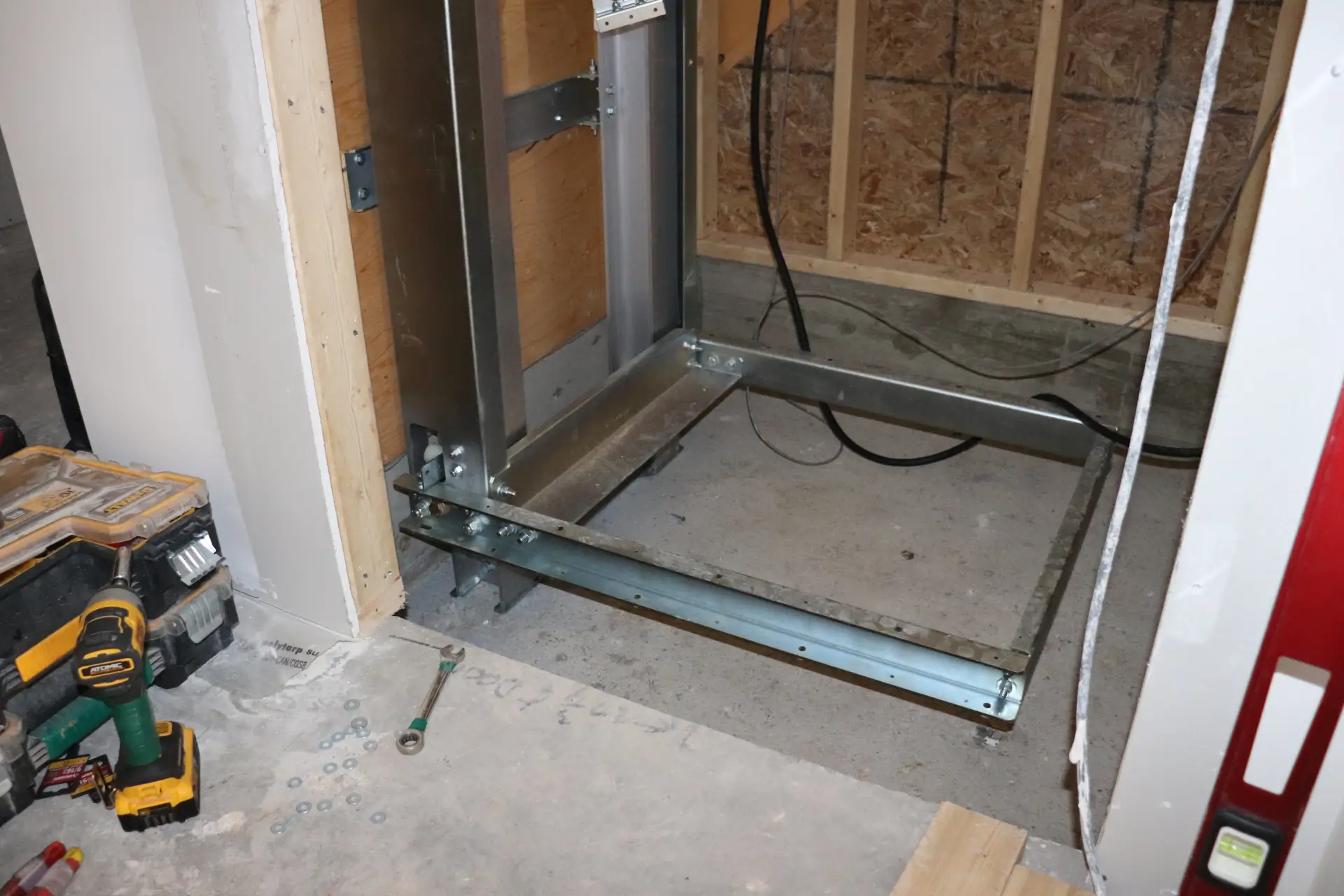
A home may have three or four levels, but that does not automatically mean the elevator needs to stop at every one. The better question is: which floors would you actually want to reach without using the stairs? For some households, connecting the main living floor to the bedrooms is enough. For others, leaving out the basement, garage-entry level, or laundry floor could mean the elevator does not solve the very problem they installed it for. If you are considering a 3-stop home elevator, thinking through those everyday routes now can help you choose a setup that works today and still makes sense years from now.
How Many Stops Can a Home Elevator Have?
- A stop is simply a floor the elevator serves. A two-stop elevator connects two floors, while a three-stop elevator connects three.
Cambridge Elevating offers several residential elevator models capable of serving multiple floors. The Elmira, Heritage, and Cambrian can serve between two and six floors, while the E50 can serve two to four, depending on the project and configuration.
The real decision, then, is not how many floors your home has, but which of those floors would benefit from elevator access.
When Is a Two-Stop Home Elevator Enough?
A two-stop configuration can make sense when there is one clear stair journey you want to eliminate.
Common examples include:
- Main floor to bedroom level
- Main floor to basement
- Garage-entry or lower level to main living floor, where the project layout and applicable requirements allow
- Two-storey homes where the main goal is easier access between everyday living and sleeping areas, or your house simply only has two stops
For a household that spends most of its time on two levels, adding another stop purely because another floor exists may not provide much additional value.
The key is to look at how the household actually moves through the home.
When Does a 3 Stop Home Elevator Make More Sense?
A third stop becomes more useful when all three levels play an important role in everyday life.
Consider a home with:
Lower level: garage entry, recreation room, or storage
Main floor: kitchen and living spaces
Upper floor: bedrooms
If the elevator only connects the main and upper floors, someone arriving with groceries may still need to use stairs from the lower level.
A 3-stop home elevator could connect that entire route.
Another common example is:
Basement → Main Floor → Bedroom Floor
If the basement contains laundry, a family room, or another space you expect to keep using long term, serving all three levels may make the home more practical as mobility needs change.
Which Floors Should Your Elevator Serve?
Rather than starting with the number of floors, ask a few practical questions.
Where do you enter the home most often?
If everyone normally enters through a lower-level garage or mudroom, that floor may be more valuable as an elevator stop than a rarely used formal entrance.
Where are the bedrooms?
For aging-in-place planning, maintaining access to the bedroom level is often a priority.
Where is the laundry?
Carrying laundry baskets between floors is one of those everyday tasks that can make an elevator useful long before accessibility becomes an issue.
Which spaces would you still want to use if stairs became difficult?
A finished basement may be easy to reach today, but if you expect it to remain an important part of the home 10 or 20 years from now, leaving it off the elevator route deserves some thought.
Our guide to aging in place home planning explores this longer-term perspective in more detail.
Does Adding a Third Stop Require More Space?
Not necessarily more floor area for the cab itself, but the elevator needs to continue vertically to the additional level and have an appropriate landing entrance there.
The home also needs to accommodate the elevator’s total travel, hoistway, pit, and overhead requirements for the selected model.
Entrance placement matters too. The door does not always need to face the same direction on every floor. Depending on the elevator and configuration, inline, through-car, or adjacent entrances may help the elevator work with different floor plans.
See our home elevator entrance configuration guide for examples.
Does a Third Stop Affect the Cost?
Generally, adding another stop affects the project cost because the elevator travels farther and an additional landing requires equipment and installation.
The building scope may also change depending on the design.
However, the cost difference should be weighed against how useful that floor will be throughout the life of the home.
If there is a strong chance you will eventually wish the elevator reached the third level, it is worth discussing that during planning rather than evaluating the decision only on the initial price.
For broader budgeting considerations, see Cambridge Elevating’s home elevator cost guide.
Can You Add a Third Stop Later?
Potentially, but homeowners should not assume it will always be simple.
Adding another floor later may require changes to the hoistway, travel height, equipment, controls, landing opening, and surrounding building structure. Whether it is practical depends on how the original elevator and home were designed.
If three-floor service is a realistic future possibility, it is worth considering during the initial planning stage. Depending on the project, including the third stop from the beginning may be more cost-effective than modifying the elevator and building structure later to accommodate it.
For new construction, the builder or general contractor handles the required hoistway and structural preparation based on the project-specific specifications supplied by Cambridge Elevating or the authorized dealer. Homeowners should not need to determine those structural requirements themselves.
The Cambridge Elevating technical documents can also help builders and architects understand model-specific planning requirements.
Two Stops or Three: What Is Better for Future-Proofing?
There is no one right answer. The best choice depends on the layout of the home, which floors need elevator access, and how you expect those needs to change over time.
A two-stop elevator may be enough if it connects the main living areas you expect to use long term. A three-stop configuration can make more sense when an additional level, such as a basement, garage-entry floor, or bedroom level, is likely to remain important in the future.
When planning for the long term, consider access to:
- The primary home entrance
- Main living spaces
- Bedrooms
- Frequently used basement areas
- Laundry or other everyday household spaces
Future-proofing is less about choosing the maximum number of stops and more about making sure the elevator serves the parts of the home you want to keep accessible over time.
Choose Stops Around How You Live
There is no rule that says every multi-storey home needs the maximum number of elevator stops.
A two-stop elevator may be exactly right for a straightforward two-level journey. A 3-stop home elevator becomes more valuable when that additional landing connects a floor you use regularly or expect to keep using as your needs change.
Cambridge Elevating’s residential models can serve up to six floors, depending on the model and project configuration, while also accommodating a range of entrance configurations. This gives homeowners and project teams flexibility to design the elevator around the home rather than the other way around.
Planning a two-stop or three-stop residential elevator?
Explore Cambridge Elevating’s home elevator models or connect with an authorized dealer to determine which floors, configuration, and model make the most sense for your home.